

Why Visibility Into Building Systems Matters for Performance, Comfort, and Cost

Updated: Jun 12

Key takeaways
Hidden HVAC and BAS issues often affect comfort, safety, cost and equipment life before they become obvious.
Visibility helps teams identify root causes, not just symptoms.
Small asset issues can lead to much larger operational and financial consequences.
Better visibility supports better facility decisions across the building.
Most building problems do not start as emergencies. They start as hidden issues inside the systems your building depends on every day.
A chiller plant may be running, but not as designed. An air handler may be moving air, but creating pressure problems that affect safety. A boiler may be cycling more than it should. On the surface, everything looks operational.
Why Visibility in Building Systems Matters
Visibility is not merely about having a building automation system, relevant data, or a dashboard full of data points.
Rather, it is about understanding what your systems are actually delivering, benchmarking this performance against the original design intent, and identifying issues before they lead to occupant comfort complaints, energy waste, safety risks, or equipment damage.
What Building Visibility Really Means
It provides operations teams with a better overview of system performance over time.
In many facility, teams assume that systems are functioning properly simply because they have been installed, commissioned, or have always worked, more or less. However, hidden problems can go undetected for months or even years as long as no one has a clear picture of actual system behavior. True Visibility means being able to monitor the performance of HVAC systems, control technology, airflow, sensors, and system interdependencies over time. It helps teams challenge assumptions and work based on facts.
You Cannot Fix What You Cannot See
In one healthcare facility, a 20-year-old refrigeration system lacked isolation valves between the individual chillers, allowing warm water to mix with the chilled supply. At the same time, only a single pump was in operation, even though the system was actually designed to run with two pumps. This issue compromised the cooling of the operating rooms; however, the root cause remained hidden until engineers used analysis tools and design schematics to determine what was actually occurring within the system.
In another care facility, four air handling units failed to switch to setback mode as intended. The result was excessive energy consumption, leading to estimated annual additional costs of $70,000. The facility had mistakenly assumed that the originally specified control logic had been correctly implemented. However, transparent insight into the actual operational behavior of the units proved otherwise.
These are not unusual stories. They illustrate what happens when facilities possess the necessary technical equipment but lack sufficient insight into its actual performance.
Visibility Helps Identify Root Causes
Without Visibility, teams are often left with no choice but to react to symptoms.
A room is too warm. A door does not close properly. The floors begin to warp. Energy costs skyrocket. Operations staff reset equipment, handle complaints, and investigate alarms. Yet, symptoms do not explain why a problem occurs in the first place.
Visibility Helps Pinpoint the Root Cause
In a hospital, excessive airflow created a wind-tunnel effect that prevented emergency exit doors from latching properly. This could have been classified as a door issue or a complaint regarding air pressure. However, the actual problem was an imbalance in airflow between the supply and exhaust fans. Data analysis revealed the true root cause.
In another instance, a school experienced continuous heating because the reheat control was programmed to the wrong voltage range. What appeared to be a heating issue was, in fact, a problem with the control logic. The true value of Visibility in this case lay not merely in seeing that heating was occurring, but in understanding why it was happening.
Visibility Protects More Than Just Energy Costs
This is where building analytics comes in, supporting root-cause analysis rather than mere speculation. When thinking about analytics, building owners often focus solely on energy savings, and while that is certainly important, greater Visibility protects far more than just energy costs.
It protects comfort. In the case of a cooling system, a lack of Visibility regarding the system configuration compromised temperature levels within the occupied spaces.
It protects safety. In another facility, an imbalance in the ventilation fans prevented emergency exit doors from closing properly.
It protects infrastructure. Excessive intake of outside air and hidden issues with dampers contributed to elevated indoor humidity levels, which subsequently damaged newly installed flooring. Visibility regarding these air-side conditions helped identify the root cause before further damage could occur.
It protects reliability. At another site, stuck shut-off valves caused boiler short-cycling, system trips, and instability. Greater Visibility regarding valve positions, flow paths, and system behavior helped explain why the boilers were cycling so frequently.
In other words: Visibility means more than just cost savings. It protects the building itself, the people inside it, and the systems that ensure its operation.
Small Problems Can Have Far-Reaching Consequences
One of the clearest lessons is this: small, hidden defects in system components often lead to disproportionately large problems.
A faulty outdoor temperature sensor in a school disabled the economizer mode, forcing the system to switch unnecessarily to mechanical cooling. The estimated repair costs amounted to around $400, while the lost savings were estimated at $10,000 to $14,000 annually.
This is precisely where the value of Visibility lies: it helps teams identify minor anomalies before they escalate into costly problems.
A sticking valve, an incorrectly programmed control range, an unbalanced fan ratio, or a network configuration issue, all of these can go undetected for months or even years if no one has a clear overview of the facility's performance data.
Building Systems Do Not Fail In Isolation.
Equipment does not fail on its own. Buildings are complex systems.
A problem with the chiller affects the ventilation system. An airflow imbalance impairs door operation. The position of the dampers influences humidity levels, which in turn impacts the flooring. A sensor failure compromises the economizer logic, thereby increasing cooling costs. A BACnet communication issue can restrict remote maintenance across the entire site.
Therefore, Visibility should extend beyond mere alarms. It should help operators understand the interconnections between components, systems, and outcomes.
Sometimes, the primary problem lies not within the equipment itself, but rather in the inability to clearly visualize that equipment.
Greater Visibility Leads To Better Decisions.
When teams can clearly see how assets are performing, they make better decisions.
They can benchmark actual performance against original design intent. They can distinguish genuine issues from mere "noise." They can prioritize the corrections that matter most. And they can uncover hidden inefficiencies before comfort, costs, or asset condition suffer.
Most importantly: They no longer have to rely on mere assumptions.
Final Thought
It helps teams utilize building automation data more effectively, improve the performance of heating, ventilation, and air conditioning systems, and make better operational decisions. Before you can optimize, you must observe. Before you can take the right measures, you must identify the right problem. Before you can improve system performance, you need confidence in how your systems are actually functioning.
This is precisely what Visibility offers: clarity, context, and a better path from guesswork to informed decisions.
What is meant by Visibility in building systems?
Visibility in building systems means understanding how HVAC systems and components networked with the Building Automation System (BAS) actually perform over time, rather than merely whether they are switched on or off.
Why is BAS data important?
BAS data helps teams uncover hidden issues, benchmark actual performance against original design specifications, and make more informed decisions regarding building operations.
How does Visibility improve building performance?
It helps teams identify the root causes of problems, reduce waste, ensure occupant comfort, and address hidden defects in technical systems at an early stage.
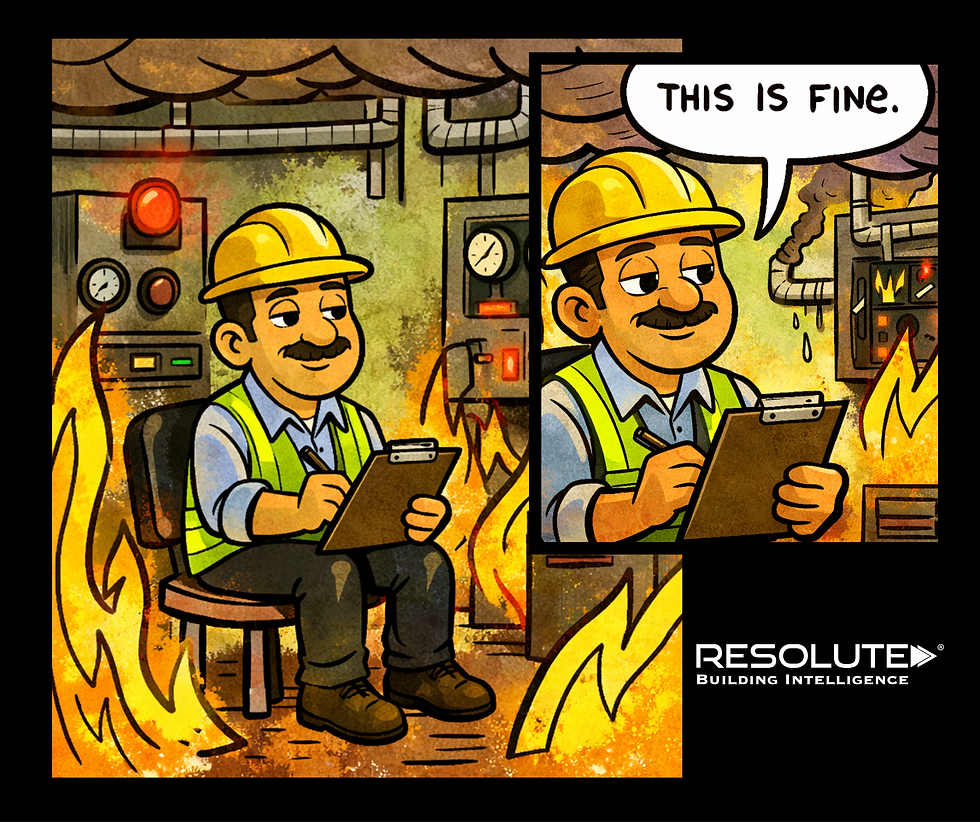
It's Not "Fine"


Comments